---
title: Blog - Best Practice Medicine (3)
description: We cover the best practices in healthcare education, travel paramedicine, and emergency response. We're here to support and prepare you and your teams with the highest level of medical education and training imaginable. (3)
---
###### [406.602.4202](tel:4066024202)
[](https://www.bestpracticemedicine.com)
- ABOUT
- [Our Story](https://bestpracticemedicine.com/about/about)
- [Team](https://bestpracticemedicine.com/about/team)
- [Careers](https://bestpracticemedicine.com/about/careers)
- [Blog](https://go.bestpracticemedicine.com/blog)
- [Government Contracting](https://bestpracticemedicine.com/about/government-contracting)
- SERVICES
- [Emergency Medical Education](https://bestpracticemedicine.com/services/emergency-medical-education)
- [Clinical Staffing](https://bestpracticemedicine.com/services/clinical-staffing)
- [High-Fidelity Simulation](https://bestpracticemedicine.com/services/high-fidelity-simulation)
- COURSES
- [View All Courses](https://bestpracticemedicine.com/courses/all-courses)
- [American Heart Association Courses](https://bestpracticemedicine.com/courses/aha-courses/american-heart-association-courses)
- [NREMT Courses](https://bestpracticemedicine.com/courses/nremt-courses)
- [Specialty Courses](https://bestpracticemedicine.com/courses/specialty-courses)
- [CONTACT](https://bestpracticemedicine.com/contact)
- [VIEW ALL COURSES](https://bestpracticemedicine.com/courses/all-courses)
## [Celebrating 6 Years of BPM!](https://go.bestpracticemedicine.com/blog/celebrating-6-years-of-bpm)
Posted by [Jamie Heinrich](https://go.bestpracticemedicine.com/blog/author/jamie-heinrich) on April 20, 2021
- [Tweet](https://twitter.com/share)
[](https://go.bestpracticemedicine.com/blog/celebrating-6-years-of-bpm)
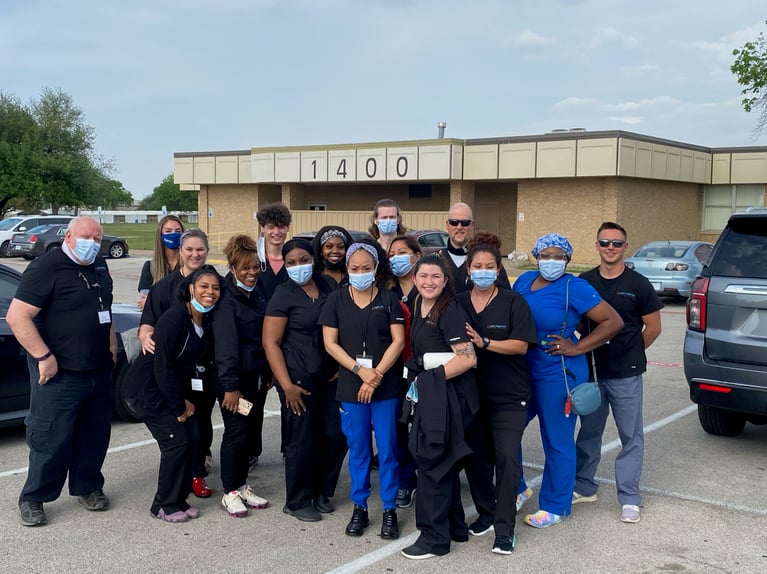
Traditionally, a six year anniversary gift is candy (for sweetness) or iron (for strength). Today looking at this business we started six years ago with three guys and a dog, we have been given sweetness and strength in ways we never expected.
[Read More](https://go.bestpracticemedicine.com/blog/celebrating-6-years-of-bpm)
Topics: [From The CEO](https://go.bestpracticemedicine.com/blog/tag/from-the-ceo), [News](https://go.bestpracticemedicine.com/blog/tag/news)
## [What is it like to be a wildland fire EMT?](https://go.bestpracticemedicine.com/blog/what-is-it-like-to-be-a-wildland-fire-emt)
Posted by [Jamie Heinrich](https://go.bestpracticemedicine.com/blog/author/jamie-heinrich) on April 05, 2021
- [Tweet](https://twitter.com/share)
[](https://go.bestpracticemedicine.com/blog/what-is-it-like-to-be-a-wildland-fire-emt)
On average, more than 100,000 wildfires clear 4-5 million acres of land in the United States. every year. During the 2020 season, Best Practice Medicine assisted and provided medical care for firefighters who fought on over 300,000+ acres of land. Though wildfires are nothing new to the United States, Best Practice Medicine has created an emerging force providing medical care for those fighting on the frontlines of wildland fires across the country.
[Read More](https://go.bestpracticemedicine.com/blog/what-is-it-like-to-be-a-wildland-fire-emt)
Topics: [Emergency Medical Training](https://go.bestpracticemedicine.com/blog/tag/emergency-medical-training), [EMS Training](https://go.bestpracticemedicine.com/blog/tag/ems-training), [Wildland Fire EMS](https://go.bestpracticemedicine.com/blog/tag/wildland-fire-ems)
## [What is a Mine Medic?](https://go.bestpracticemedicine.com/blog/mine-paramedic)
Posted by [Jamie Heinrich](https://go.bestpracticemedicine.com/blog/author/jamie-heinrich) on March 30, 2021
- [Tweet](https://twitter.com/share)
[](https://go.bestpracticemedicine.com/blog/mine-paramedic)
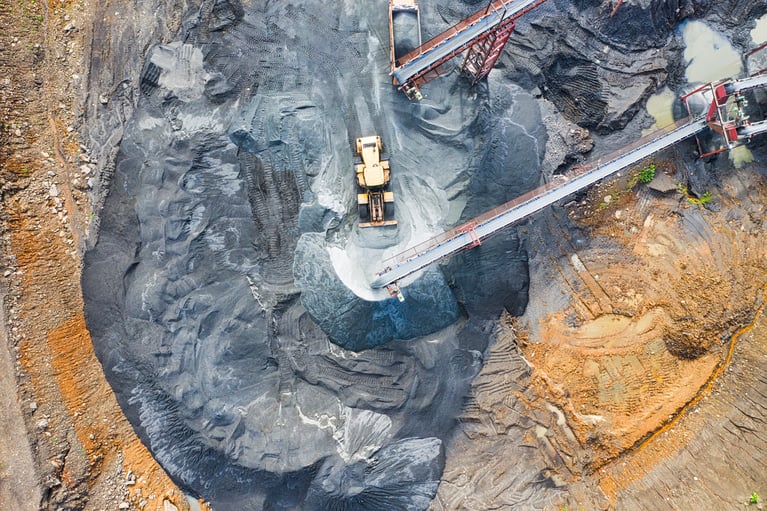
I started working at Best Practice Medicine (BPM) about two months ago and since I have been here I have heard of many pockets of EMS that I never knew existed, let alone just how important it is for these people to do their jobs. I began a little quest of asking questions to understand what these jobs are and who does them. This week - What’s a Mine Medic?
[Read More](https://go.bestpracticemedicine.com/blog/mine-paramedic)
Topics: [Emergency Medical Training](https://go.bestpracticemedicine.com/blog/tag/emergency-medical-training), [Industrial Staffing](https://go.bestpracticemedicine.com/blog/tag/industrial-staffing)
## [What is TECCRE?](https://go.bestpracticemedicine.com/blog/teccre)
Posted by [Jamie Heinrich](https://go.bestpracticemedicine.com/blog/author/jamie-heinrich) on March 24, 2021
- [Tweet](https://twitter.com/share)
[.png?width=767&name=TECCRE%20TRAINING%20(1).png)](https://go.bestpracticemedicine.com/blog/teccre)
Active shooter events and other mass casualty incidents, particularly ones involving an active threat, have been a steadily growing occurrence in the 21st century. In the past week alone we saw [7 active shooter events in 7 days across the USA](https://www.cnn.com/2021/03/23/us/7-mass-shootings-7-days-trnd/index.html). These events bring many cross-discipline providers from Law Enforcement, EMS, and Fire Departments together to effectively respond the the event. The hurdle in preparation for these events is that these providers seldom train together in these environments. System-wide procedures and protocols are only as effective as they have been practiced and implemented. Enter: Tactical Emergency Casualty Care Rural Environments (TECCRE)
[Read More](https://go.bestpracticemedicine.com/blog/teccre)
Topics: [Emergency Medical Training](https://go.bestpracticemedicine.com/blog/tag/emergency-medical-training), [EMT Training](https://go.bestpracticemedicine.com/blog/tag/emt-training), [TECCRE](https://go.bestpracticemedicine.com/blog/tag/teccre)
## [BPM RELEASES PURPOSE BUILT MOBILE VACCINATION CENTERS](https://go.bestpracticemedicine.com/blog/vaccine-administration-support-team-vast-releases-purpose-built-mobile-vaccination-centers)
Posted by [Matt MaCoy](https://go.bestpracticemedicine.com/blog/author/matt-macoy) on March 22, 2021
- [Tweet](https://twitter.com/share)
[](https://go.bestpracticemedicine.com/blog/vaccine-administration-support-team-vast-releases-purpose-built-mobile-vaccination-centers)
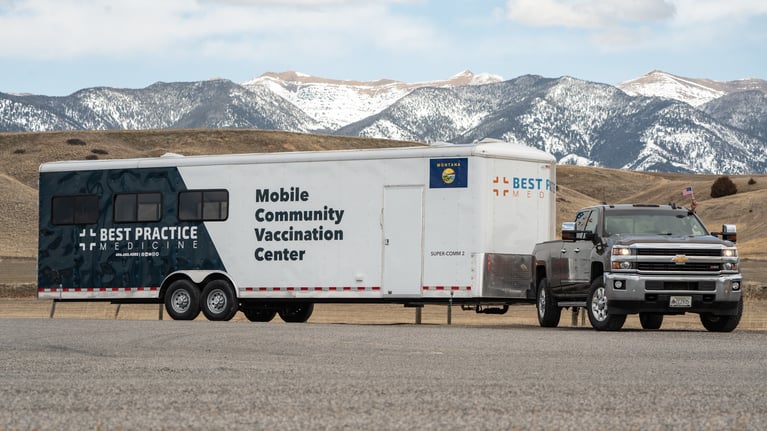
| Date March 19, 2021 BEST PRACTICE MEDICINE VACCINE ADMINISTRATION SUPPORT TEAM (VAST) RELEASES PURPOSE BUILT MOBILE VACCINATION CENTERS **Bozeman, MT** — Best Practice Medicine (BPM) released a line of new, purpose built Mobile Community Vaccination Centers on Saturday, March 20, 2021, as added resources for their Vaccine Administration and Support Taskforce (VAST). With the addition of these trailers teams are capable of administering 300-400 vaccines each day at each location in Montana, completely self-sustained. |
| --- |
[Read More](https://go.bestpracticemedicine.com/blog/vaccine-administration-support-team-vast-releases-purpose-built-mobile-vaccination-centers)
Topics: [From The CEO](https://go.bestpracticemedicine.com/blog/tag/from-the-ceo), [VAST](https://go.bestpracticemedicine.com/blog/tag/vast)
## [What is BPM's Wildland Fire EMT/Paramedic program?](https://go.bestpracticemedicine.com/blog/wildland-fire-emt-paramedic)
Posted by [Jamie Heinrich](https://go.bestpracticemedicine.com/blog/author/jamie-heinrich) on March 08, 2021
- [Tweet](https://twitter.com/share)
[](https://go.bestpracticemedicine.com/blog/wildland-fire-emt-paramedic)
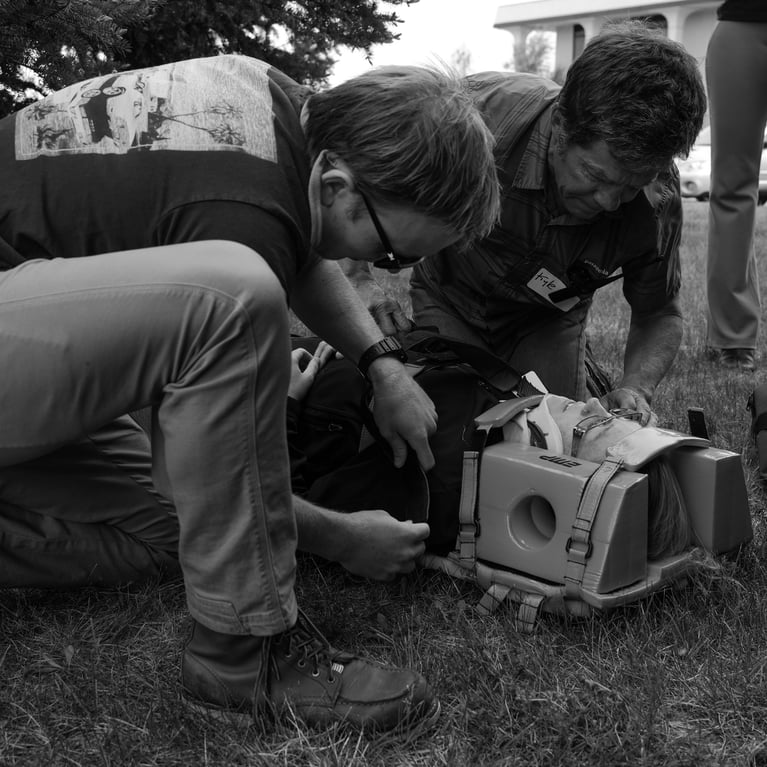
Here at Best Practice Medicine, we are dedicated to improving patient care nationwide. To that end, we provide direct clinical patient care through our Paramedic Resource Group (PRG). PRG was initially founded to target the need for well trained EMS responders to deploy with Forest Service Fire Line teams.
[Read More](https://go.bestpracticemedicine.com/blog/wildland-fire-emt-paramedic)
Topics: [Emergency Medical Training](https://go.bestpracticemedicine.com/blog/tag/emergency-medical-training), [EMT Training](https://go.bestpracticemedicine.com/blog/tag/emt-training), [News](https://go.bestpracticemedicine.com/blog/tag/news), [Job Openings](https://go.bestpracticemedicine.com/blog/tag/job-openings)
## [How to Become a Licensed EMT](https://go.bestpracticemedicine.com/blog/-emt-montana)
Posted by [Jamie Heinrich](https://go.bestpracticemedicine.com/blog/author/jamie-heinrich) on March 01, 2021
- [Tweet](https://twitter.com/share)
[.png?width=767&name=How%20to%20become%20an%20EMT%20Infographic%20(1).png)](https://go.bestpracticemedicine.com/blog/-emt-montana)
“Becoming an EMT gives you the opportunity to help your neighbors in times of crisis. It can make you calm, confident and prepared for everyday challenges and the greatest emergencies.”
**How do I become a licensed EMT in Montana?** We are often asked this question here at BPM, so our team put together a step by step guide for you!
[Read More](https://go.bestpracticemedicine.com/blog/-emt-montana)
Topics: [Emergency Medical Training](https://go.bestpracticemedicine.com/blog/tag/emergency-medical-training), [EMT Training](https://go.bestpracticemedicine.com/blog/tag/emt-training)
## [Best Practice Medicine's VAST assists Gallatin County vaccine efforts](https://go.bestpracticemedicine.com/blog/vaccine-vast-gallatin-county)
Posted by [Jamie Heinrich](https://go.bestpracticemedicine.com/blog/author/jamie-heinrich) on February 22, 2021
- [Tweet](https://twitter.com/share)
[](https://go.bestpracticemedicine.com/blog/vaccine-vast-gallatin-county)
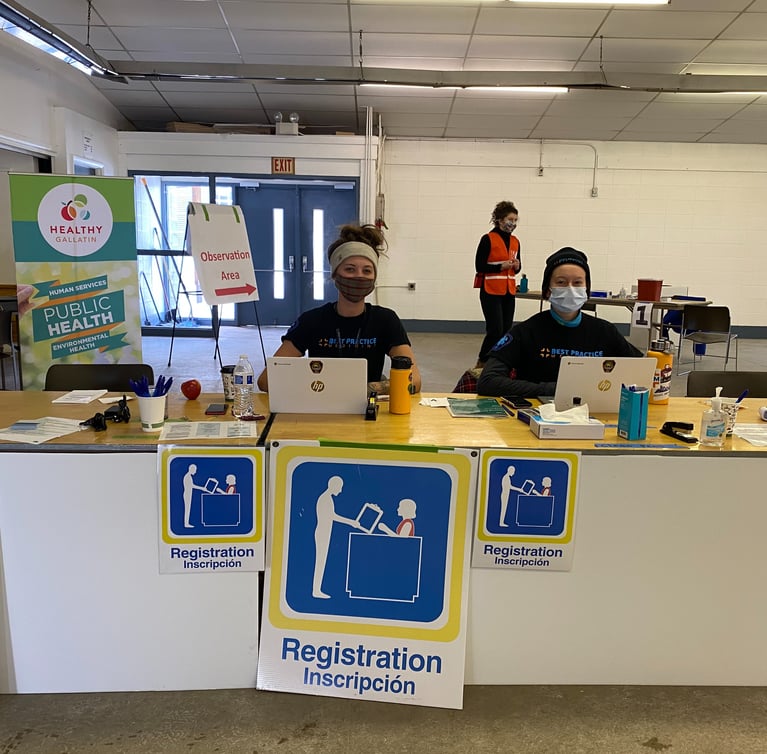
**Bozeman, MT** — Best Practice Medicine (BPM) announces a partnership with [Gallatin County Health Department](https://www.healthygallatin.org/) in support of vaccine administration across Gallatin county.
[Read More](https://go.bestpracticemedicine.com/blog/vaccine-vast-gallatin-county)
Topics: [News](https://go.bestpracticemedicine.com/blog/tag/news), [Job Openings](https://go.bestpracticemedicine.com/blog/tag/job-openings)
## [Best Practice Medicine turns Five!](https://go.bestpracticemedicine.com/blog/best-practice-medicine-turns-five)
Posted by [Ben King](https://go.bestpracticemedicine.com/blog/author/ben-king) on April 20, 2020
- [Tweet](https://twitter.com/share)
[.jpg?width=767&name=IMG_3766%20(1).jpg)](https://go.bestpracticemedicine.com/blog/best-practice-medicine-turns-five)
Yesterday as I was looking for some business records I came across the original filing paperwork with IRS to establish Best Practice Medicine as a limited liability corporation. Turns out, today we turn five years old! (At least that's when we started paying taxes...). I can remember spending weeks trying to understand what an LLC was, how to file the paperwork, and wondering if all the hassle of setting up a company would be worth it. I admit, at the time, I didn't think it would be.
[Read More](https://go.bestpracticemedicine.com/blog/best-practice-medicine-turns-five)
Topics: [From The CEO](https://go.bestpracticemedicine.com/blog/tag/from-the-ceo), [News](https://go.bestpracticemedicine.com/blog/tag/news)
## [Show me the data... (Does simulation really work?)](https://go.bestpracticemedicine.com/blog/show-me-the-data...-does-simulation-really-work)
Posted by [Ben King](https://go.bestpracticemedicine.com/blog/author/ben-king) on March 04, 2020
- [Tweet](https://twitter.com/share)
[](https://go.bestpracticemedicine.com/blog/show-me-the-data...-does-simulation-really-work)
This [study](https://journals.lww.com/jtrauma/Citation/2020/02000/Does_simulation_work__Monthly_trauma_simulation.5.aspx) published February, 2020 in the [Journal of Trauma and Acute Care Surgery](https://journals.lww.com/jtrauma/pages/default.aspx) contributed to the substantial and growing [body of research](https://simmt.org/the-case-for-simulation/the-ethical-imperative-of-simulation) dedicated to the question, does simulation work? Can we show improved patient outcomes as a result of experiential education facilitated by the facsimile creation of life like rehearsal?
###### **Unequivocally the answer is, yes.**
The evidence base for this conclusion is neither small or narrow in its focus. Take for example this study which is assessing whether trauma teams who participate in regular high fidelity simulations show an improvement in the time it takes to establish a chest tube in a trauma patient.
"Median pretraining time for resuscitative thoracotomy was 14 minutes (IQR, 8–32 minutes); posttraining median time was 3 minutes (IQR, 2.7–8 minutes,*p*= 0.02)"
Read that again...
###### **Before simulation based learning, median time to place a chest tube = 14 minutes**
###### **After simulation based learning, median time to place a chest tube = 3 minutes**
###### The **delta of this is 11 minutes**.
Blood and air filling your chest cavity, placing pressure on your vena-cava likely resulting in its collapse leading to PEA cardiac arrest and the dreaded **trauma arrest** death spiral. An eleven minute reduction in the time to facilitate the evacuation of the blood and or air may very well be the difference between life and death. This just one of many studies that strongly correlate the integration of serial simulation into clinical practice resulting in improved care and better patient outcomes.
We compile studies to support the impact of simulation based education in healthcare. We have identified that simulation can be reliably attributed to;
1. [Improves patient outcomes](https://go.bestpracticemedicine.com/blog/best-practice-medicine-launches-new-division-with-new-rural-focused-tactical-emergency-medicine-course-in-flathead-county)
2. [Reduces preventable medical error](http://study%20links%20simulation%20training%20with%20improved%20prehospital%20pediatric%20care/)
3. [Increases team performance](https://bestpracticemedicine.com/support-tools/the-science-research-of-simulation?__hstc=258286421.e217bf55da69335503d46b58b2643239.1581373828515.1583349857008.1583361991289.14&__hssc=258286421.1.1583361991289&__hsfp=2733259174)
4. [Identifies latent patient safety threats](https://bestpracticemedicine.com/support-tools/the-science-research-of-simulation?__hstc=258286421.e217bf55da69335503d46b58b2643239.1581373828515.1583349857008.1583361991289.14&__hssc=258286421.1.1583361991289&__hsfp=2733259174)
## Simulation works!
Park, C., Grant, J., Dumas, R. P., Dultz, L., Shoultz, T. H., Scott, D. J., … Cripps, M. W. (2020). Does simulation work? Monthly trauma simulation and procedural training are associated with decreased time to intervention. *Journal of Trauma and Acute Care Surgery*, *88*(2), 242–248. doi: 10.1097/ta.0000000000002561
[Read More](https://go.bestpracticemedicine.com/blog/show-me-the-data...-does-simulation-really-work)
Topics: [Simulation](https://go.bestpracticemedicine.com/blog/tag/simulation), [From The CEO](https://go.bestpracticemedicine.com/blog/tag/from-the-ceo), [Medical Residents](https://go.bestpracticemedicine.com/blog/tag/medical-residents)
[Previous](https://go.bestpracticemedicine.com/blog/page/2) [All posts](https://go.bestpracticemedicine.com/blog/all) [Next](https://go.bestpracticemedicine.com/blog/page/4)
### Recent Posts
### Posts By Topic
- [EMS Training (25)](https://go.bestpracticemedicine.com/blog/tag/ems-training)
- [Emergency Medical Training (24)](https://go.bestpracticemedicine.com/blog/tag/emergency-medical-training)
- [News (20)](https://go.bestpracticemedicine.com/blog/tag/news)
- [EMT Training (16)](https://go.bestpracticemedicine.com/blog/tag/emt-training)
- [Simulation (12)](https://go.bestpracticemedicine.com/blog/tag/simulation)
- [From The CEO (9)](https://go.bestpracticemedicine.com/blog/tag/from-the-ceo)
- [Events (6)](https://go.bestpracticemedicine.com/blog/tag/events)
- [Job Openings (5)](https://go.bestpracticemedicine.com/blog/tag/job-openings)
- [Education (4)](https://go.bestpracticemedicine.com/blog/tag/education)
- [Healthcare safety (3)](https://go.bestpracticemedicine.com/blog/tag/healthcare-safety)
- [Industrial Staffing (3)](https://go.bestpracticemedicine.com/blog/tag/industrial-staffing)
- [Vital Signs (3)](https://go.bestpracticemedicine.com/blog/tag/vital-signs)
- [AEMT (2)](https://go.bestpracticemedicine.com/blog/tag/aemt)
- [American Heart Association (2)](https://go.bestpracticemedicine.com/blog/tag/american-heart-association)
- [Medical Residents (2)](https://go.bestpracticemedicine.com/blog/tag/medical-residents)
- [Travel Paramedic (2)](https://go.bestpracticemedicine.com/blog/tag/travel-paramedic)
- [Wildland Fire EMS (2)](https://go.bestpracticemedicine.com/blog/tag/wildland-fire-ems)
- [Clinical Staffing (1)](https://go.bestpracticemedicine.com/blog/tag/clinical-staffing)
- [TECCRE (1)](https://go.bestpracticemedicine.com/blog/tag/teccre)
- [Travel Paramedicine (1)](https://go.bestpracticemedicine.com/blog/tag/travel-paramedicine)
- [VAST (1)](https://go.bestpracticemedicine.com/blog/tag/vast)
See all
### Subscribe Here!
#### Be Prepared. Improve Outcomes. Stay Sharp.
From EMT and EMS how-to guides, to simulation and emergency critical care provider best practices, we'll cover the latest cutting edge information and news in the emergency medical world. We're here to support and prepare you and your teams with the highest level of medical education and training imaginable. Want more? [Contact us today](https://bestpracticemedicine.com/support-tools/contact)!
##### SERVICES
- [Mobile High Fidelity Simulation](https://bestpracticemedicine.com/services#614)
- [New Facility and Team Training](https://bestpracticemedicine.com/services#618)
- [Accreditation Preparedness](https://bestpracticemedicine.com/services#613)
- [Surgery Center Training](https://bestpracticemedicine.com/services#612)
- [Simulation – Cardiac Arrest Response](https://bestpracticemedicine.com/services#15510)
- [Malignant Hyperthermia Response Training](https://bestpracticemedicine.com/services#787)
- [Continuing Nursing Education Events](https://bestpracticemedicine.com/services#616)
- [Allied Health Education](https://bestpracticemedicine.com/services#619)
- [Customizable Services](https://bestpracticemedicine.com/services#622)
##### Courses
- [View All Courses](https://bestpracticemedicine.com/courses/all-courses)
- [American Heart Association Courses](https://bestpracticemedicine.com/courses/american-heart-association-courses)
- [Best Practices in Rural STEMI Care](https://bestpracticemedicine.com/courses/best-practices-in-rural-stemi-care)
- [CPR/AED/First Aid](https://bestpracticemedicine.com/courses/cpr-aed-first-aid)
- [EMS Refreshers](https://bestpracticemedicine.com/courses/ems-refreshers)
- [Emergency Medical Technician (EMT)](https://bestpracticemedicine.com/courses/emergency-medical-technician-emt)
- [Emergency Pediatric Care (EPC)](https://bestpracticemedicine.com/courses/emergency-pediatric-care-epc)
- [Gallatin County EMS Grand Rounds](https://bestpracticemedicine.com/courses/gallatin-county-ems-grand-rounds)
- [Naloxone Master Trainer](https://bestpracticemedicine.com/courses/naloxone-master-trainer)
- [Pre-hospital Trauma Life Support (PHTLS)](https://bestpracticemedicine.com/courses/pre-hospital-trauma-life-support-phtls)
- [Specialty Courses](https://bestpracticemedicine.com/courses/specialty-courses)
- [Tactical Emergency/Combat Casualty Care](https://bestpracticemedicine.com/courses/tactical-emergency-combat-casualty-care-tecc-and-tccc)
##### Company
- [About](https://bestpracticemedicine.com/company/about)
- [Blog](https://go.bestpracticemedicine.com/blog)
- [Team](https://bestpracticemedicine.com/company/team)
- [Events](https://bestpracticemedicine.com/company/events)
- [Careers](https://bestpracticemedicine.com/company/careers)
- [In the News](https://bestpracticemedicine.com/company/in-the-news)
- [Government Contracting](https://bestpracticemedicine.com/company/government-contracting)
##### Support & Tools
- [Contact](https://bestpracticemedicine.com/support-tools/contact)
- [Media Tools](https://bestpracticemedicine.com/support-tools/media-tools-1)
- [Resources](https://bestpracticemedicine.com/support-tools/resources)
- [Legal](https://bestpracticemedicine.com/support-tools/legal)
- [Privacy Policy](https://bestpracticemedicine.com/support-tools/privacy-policy)
- [Online Learning Management Portal](http://portal.bestpracticemedicine.com/login/index.php)
#### Federal Information:
###### D-U-N-S #080051321 CAGE ID #7QC67 NAICS CODE #611519
[](https://bestpracticemedicine.com/)
#### 406.602.4202
#### 1.800.276.6123
###### 601 Haggerty lane, Suite A Bozeman, MT 59715
© 2019 Best Practice Medicine